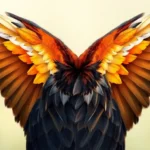

We often marvel at a bird’s ability to soar through the sky, but have you ever stopped to consider the extraordinary visual systems that make their aerial mastery possible? Bird eyes aren’t just beautiful features – they’re incredibly sophisticated biological instruments that put our human vision to shame.
These remarkable organs can detect ultraviolet light, spot tiny movements from incredible distances, and process visual information at lightning speed. From the massive eyes of owls that gather every photon of available light to the razor-sharp vision of eagles that can spot prey from miles away, avian eyesight represents millions of years of evolutionary perfection.
We’re about to jump into the intriguing area of bird vision and discover why these feathered creatures see our industry in ways we can barely imagine. Prepare to be amazed by nature’s most advanced visual technology.
The Anatomy of Bird Eyes
Bird eyes represent complex biological masterpieces that differ dramatically from mammalian visual systems. These remarkable organs contain specialized structures and adaptations that enable the extraordinary visual capabilities we’ve explored.

4K Video Recording for Day & Night: TELUHA night vision goggles are engineered for high-clarity viewing in dim light and full darkness. Capture 4K video and high-resolution photos with precision—ideal for wildlife observation, hunting, and security applications where detail matters most

4K Video Recording for Day & Night: TELUHA night vision goggles are engineered for high-clarity viewing in dim light and full darkness. Capture 4K video and high-resolution photos with precision—ideal for wildlife observation, hunting, and security applications where detail matters most

Full Visibility in Darkness:night vision goggles features a 7-layer coated night vision lens with f/1.4 aperture, 25mm focal length, 8x digital zoom, and 3W 850nm IR spotlight. Delivers HD photos/video in daylight, low-light, and total darkness. Backlit buttons ensure effortless operation even in pitch-black conditions.
Eye Structure and Components
Bird eyes feature three distinct layers that work together to process visual information with unprecedented precision. The outermost scleral layer includes a unique bony ring called the sclerotic ring, which provides structural support that mammalian eyes lack. This ring consists of 10-18 small bones that maintain eye shape during rapid flight movements and pressure changes.
The cornea in bird eyes is proportionally larger than in humans, covering up to 50% more surface area to maximize light intake. Behind the cornea, the iris contains specialized muscles that adjust pupil size with remarkable speed, contracting in milliseconds compared to the slower human response time of 200-300 milliseconds.
Birds possess a pecten oculi, a comb-like structure projecting into the vitreous humor that has no equivalent in mammalian eyes. This vascular organ supplies nutrients to the retina without blood vessels that could obstruct vision. The pecten varies in size and complexity across species, with larger pectens found in birds requiring high visual acuity like raptors.
The retina contains multiple types of photoreceptor cells, including four types of cone cells compared to humans’ three types. These additional cones detect ultraviolet wavelengths between 300-400 nanometers, creating a visual spectrum that extends far beyond human perception. Oil droplets within these cone cells act as filters, improving color discrimination and reducing chromatic aberration.
Size and Positioning Variations
Eye size varies dramatically across bird species based on their ecological requirements and hunting strategies. Owls possess the largest eyes relative to body size, with some species having eyes that weigh up to 5% of their total body weight. These oversized organs collect maximum light for nocturnal hunting activities.
Eagles and hawks maintain eyes that measure 1.4 times larger than human eyes even though having smaller overall body sizes. Their eyes contain approximately 1 million photoreceptors per square millimeter compared to humans’ 200,000, enabling them to detect prey from distances exceeding 2 miles.
Eye positioning creates distinct visual advantages depending on species lifestyle. Predatory birds like falcons have forward-facing eyes that provide binocular vision covering 35-50 degrees, allowing precise depth perception during high-speed dives. Prey species such as pigeons and sparrows position their eyes laterally, achieving nearly 360-degree visual coverage with only small blind spots directly behind their heads.
Ground-dwelling birds like woodcocks have eyes positioned high on their skulls, creating 360-degree horizontal vision while their bills probe soil for food. Water birds such as cormorants can adjust their eye positioning underwater through specialized muscle control, maintaining clear vision both above and below the surface.
The distance between a bird’s eyes, called interpupillary distance, ranges from 8-12mm in small songbirds to 40-60mm in large raptors. This spacing directly affects depth perception accuracy, with wider spacing providing better distance judgment for species that require precise targeting abilities.
How Bird Vision Works
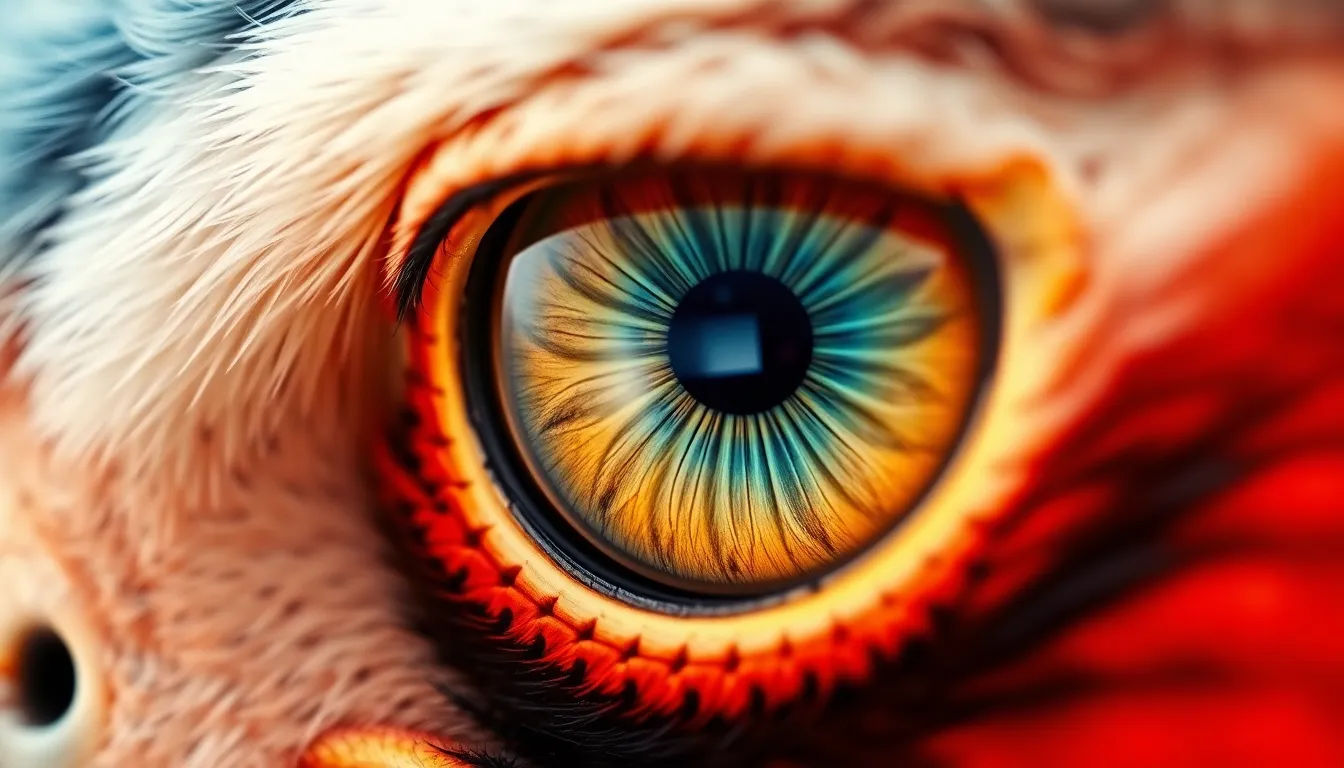
Bird vision operates through sophisticated mechanisms that transform light into detailed visual information with remarkable efficiency. These systems process electromagnetic radiation across broader spectrums than humans can perceive.

POWERFUL 25X MAGNIFICATION: Giant astronomy binoculars with massive 70mm objective lenses and 25x power. Pair them with any tripod for long-distance land-based viewing or astronomical observation.

[5000M Small and Exquisite Binoculars] -- Very suitable for outdoor camping, outdoor sightseeing, tourism, concert opera, animal show, sports, games, hunting or other outdoor activities.

🐧【𝟏𝟓𝐱 𝐇𝐢𝐠𝐡-𝐏𝐨𝐰𝐞𝐫𝐞𝐝 𝐁𝐢𝐧𝐨𝐜𝐮𝐥𝐚𝐫𝐬: 𝐃𝐢𝐬𝐜𝐨𝐯𝐞𝐫 𝐍𝐚𝐭𝐮𝐫𝐞'𝐬 𝐒𝐦𝐚𝐥𝐥𝐞𝐬𝐭 𝐃𝐞𝐭𝐚𝐢𝐥𝐬】Elevate your viewing experience with these 15x high-powered binoculars designed for adults. Crafted for observing extremely long distances, these professional high-powered binoculars provide a razor-sharp view of the smallest details even at longer ranges. Unlock the smallest secrets of nature and immerse yourself in crisp, razor-sharp visuals that traditional 12x magnification binoculars cannot match.
Light Processing and Color Detection
Birds process light through specialized photoreceptor cells that capture wavelengths extending into the ultraviolet spectrum. Four distinct types of cone cells detect different color ranges: ultraviolet (300-400 nanometers), blue (400-500 nanometers), green (500-600 nanometers), and red (600-700 nanometers). Each cone cell contains oil droplets that filter exact wavelengths to enhance color discrimination.
The retina converts photons into electrical signals through rhodopsin and cone opsin proteins. Oil droplets within cone cells act as biological filters, concentrating exact wavelengths and improving color contrast. Red oil droplets enhance red wavelength detection, while clear droplets optimize ultraviolet perception.
Double cone cells provide brightness detection and motion sensitivity. Single cone cells enable precise color differentiation across tetrachromatic vision. This combination allows birds to distinguish between colors that appear identical to human eyes.
Processing occurs within specialized brain regions including the optic tectum and visual cortex. Neural pathways rapidly analyze color information, motion detection, and spatial relationships. The pecten oculi supplies nutrients to support this intensive visual processing without interfering with light transmission.
Binocular vs. Monocular Vision
Predatory birds use binocular vision through forward-facing eyes that create overlapping visual fields. Raptors like hawks and eagles achieve 50-70 degrees of binocular overlap, enabling precise depth perception for hunting. This configuration sacrifices total visual coverage for enhanced stereoscopic vision.
Prey species employ monocular vision with laterally positioned eyes that maximize visual field coverage. Songbirds and waterfowl achieve 340-degree visual coverage with minimal blind spots. Each eye operates independently, scanning different areas simultaneously for potential threats.
The transition between monocular and binocular modes occurs when birds rotate their heads to align both eyes on exact targets. Owls demonstrate extreme binocular capabilities with 70-degree overlap but compensate for limited head rotation with 270-degree neck flexibility.
Visual field positioning affects flight navigation and feeding behaviors. Ground-foraging birds maintain constant monocular surveillance while pecking, alternating between binocular focus for food identification and monocular scanning for predator detection. Aerial hunters switch to binocular mode during final approach phases to calculate precise strike distances.
Unique Visual Capabilities of Birds

Bird eyes possess extraordinary abilities that extend far beyond the conventional visual spectrum humans experience. These remarkable capabilities represent millions of years of evolutionary refinement, enabling birds to perceive environmental elements completely invisible to our visual system.

Adjustable iris aperture:sizes m30 to m37,apertures1.5-26mm iris,min Diameter1.5mm, Max Diameter26mm

90fps High Speed USB Camera: 2MP global shutter camera with max 1920×1200 resolution and up to 90fps high frame rate at 1080P. Powered by 1/2.6” Aptina AR0234 sensor for sharp, clear imaging when capturing fast-moving objects.

Global Shutter: Shoot high-speed moving objects in crisp sharp images. Avoid the rolling artifacts to get a much more accurate complete picture than the rolling shutter cameras.
Ultraviolet Light Perception
Birds detect ultraviolet wavelengths between 300-400 nanometers through specialized cone cells containing unique photopigments. We observe this capability in approximately 93% of bird species, including songbirds like blue tits and European starlings that use UV patterns for mate selection and foraging.
The fourth type of cone cell in bird retinas contains either violet-sensitive (VS) or ultraviolet-sensitive (UVS) photopigments that capture short-wavelength light. Passerine birds typically possess UVS pigments, while non-passerine species often have VS variants that detect slightly longer wavelengths.
These UV-detecting abilities reveal hidden patterns on flowers, fruits, and even other birds that remain completely invisible to human vision. Male peacocks display intricate UV markings on their tail feathers that females evaluate during courtship displays. Kestrels locate mouse urine trails through UV reflection, transforming invisible scent markers into visible hunting guides.
Magnetic Field Detection
Certain bird species perceive Earth’s magnetic field through cryptochrome proteins located in specialized retinal cells. We find these magnetoreceptive capabilities primarily in migratory birds like European robins, garden warblers, and various shorebird species.
Cryptochrome proteins undergo quantum entanglement reactions when exposed to blue light wavelengths around 420 nanometers. These quantum processes create radical pairs that align differently depending on magnetic field orientation, generating visual overlays that appear as patterns or shadows across the bird’s visual field.
Research conducted on European robins demonstrates that magnetic field perception requires exact light conditions to function properly. Birds lose their magnetic compass abilities in complete darkness or under red light illumination, confirming the light-dependent nature of this remarkable sensory system.
Motion Detection and Tracking
Bird eyes process movement with extraordinary precision through specialized retinal ganglion cells that respond exclusively to motion stimuli. We measure bird motion detection capabilities at temporal resolutions exceeding 140 frames per second, compared to human vision processing approximately 24 frames per second.
Direction-selective ganglion cells within bird retinas contain inhibitory mechanisms that suppress responses to stationary objects while amplifying moving targets. Raptors like peregrine falcons use these cells to track prey during high-speed aerial pursuits reaching 240 miles per hour.
Small object motion detectors in bird retinas identify targets as tiny as individual insects against complex backgrounds. These specialized cells ignore large-scale movements like swaying vegetation while maintaining focus on potential prey items moving through the visual field. Flycatcher species demonstrate this capability by capturing insects smaller than 2 millimeters from perches 15 feet away.
Adaptations Across Different Bird Species
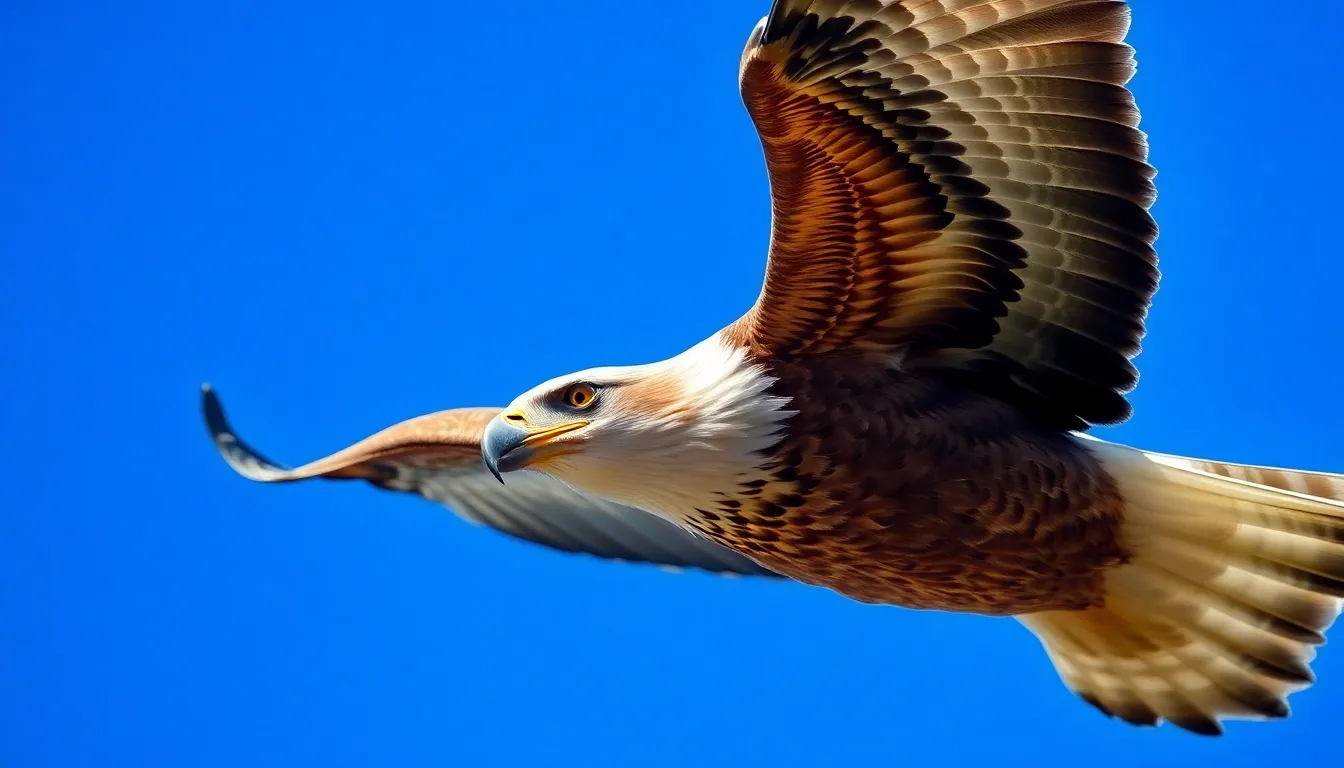
Bird eyes showcase remarkable species-exact adaptations that match each bird’s ecological niche and survival requirements. These evolutionary modifications demonstrate how visual systems optimize for hunting strategies, environmental conditions, and feeding behaviors.

Set of 60 prepared microscope slides, including plants, insects, and animal tissues, for use in biological education

High quality glass

This is a package of pre-cleaned 72 piece microscope blank slides and 100 piece 22mmx22mm square cover slips
Predatory Birds and Sharp Vision
Predatory birds possess the most acute vision among all vertebrates, with visual acuity reaching 8 times greater than humans. Eagles maintain exceptional long-distance vision through enlarged eyes that occupy 50% of their skull volume, compared to just 5% in humans. Their retinas contain approximately 1 million cone cells per square millimeter, creating dense photoreceptor arrays that detect prey movements from distances exceeding 2 miles.
Hawks demonstrate specialized foveal regions with cone cell densities reaching 1.5 million per square millimeter, enabling them to track fast-moving targets with surgical precision. The temporal fovea in these raptors provides enhanced lateral vision for detecting movement during flight, while the central fovea delivers sharp forward vision for target acquisition. Falcon species exhibit additional adaptations including nictitating membranes that protect their eyes during high-speed dives reaching 200 mph.
Osprey eyes contain specialized oil droplets that filter light wavelengths, reducing glare from water surfaces and improving contrast detection for fish spotting. These adaptations allow ospreys to identify fish swimming 3 feet below the water surface while soaring at heights of 100 feet.
Nocturnal Birds and Night Vision
Nocturnal birds develop enlarged corneas and pupils that maximize light gathering capabilities in low-light environments. Owl eyes occupy 70% of their skull space, with corneal diameters measuring 3 times larger than diurnal birds of similar body size. Their retinas contain predominantly rod cells, with densities reaching 56,000 rods per square millimeter compared to 4,000 cone cells in the same area.
Great horned owls possess tubular-shaped eyes that concentrate available light through elongated optical chambers, increasing light sensitivity by 100 times compared to human eyes. The asymmetrical ear placement in many owl species complements their enhanced night vision, creating precise three-dimensional hunting maps through combined auditory and visual processing.
Barn owls exhibit specialized facial disc feathers that funnel sound waves toward their ears, while their eyes maintain exceptional motion detection capabilities even in near-darkness. Their retinal organization includes enlarged ganglion cells that process dim light signals more efficiently than standard photoreceptor arrangements.
Nightjars demonstrate additional nocturnal adaptations through reflective tapetum lucidum layers behind their retinas, which bounce light back through photoreceptor cells for secondary processing. This biological mirror system enhances their ability to detect insects during twilight hunting periods.
Aquatic Birds and Underwater Sight
Aquatic birds develop specialized visual adaptations for both aerial and underwater environments through flexible accommodation systems. Diving ducks possess powerful ciliary muscles that rapidly adjust lens curvature, compensating for the 4-fold increase in optical power when transitioning from air to water. Their accommodation range spans 40-50 diopters, compared to just 15 diopters in terrestrial birds.
Cormorants exhibit nictitating membranes with transparent windows that protect their eyes while maintaining clear underwater vision during pursuit diving. These membranes contain specialized cells that secrete mucus, creating an optical interface that reduces light refraction distortions beneath the water surface. Cormorant eyes also feature flattened corneas that minimize spherical aberration when viewing objects through water.
Penguins possess the most extreme aquatic eye adaptations, with corneas that become optically neutral underwater, shifting focusing responsibilities entirely to their powerful lens muscles. Their eyes contain specialized yellowish filters that enhance contrast in blue-green underwater environments and reduce harmful UV radiation at high altitudes and reflective ice surfaces.
Pelican eyes demonstrate dual-zone retinal organization with high cone cell densities in the central region for precise fish targeting and enhanced rod cell concentrations in peripheral areas for detecting movement across wide visual fields. Their accommodation system adjusts within 40 milliseconds, enabling accurate depth perception during plunge-diving maneuvers from heights reaching 60 feet.
Evolutionary Advantages of Bird Eyes
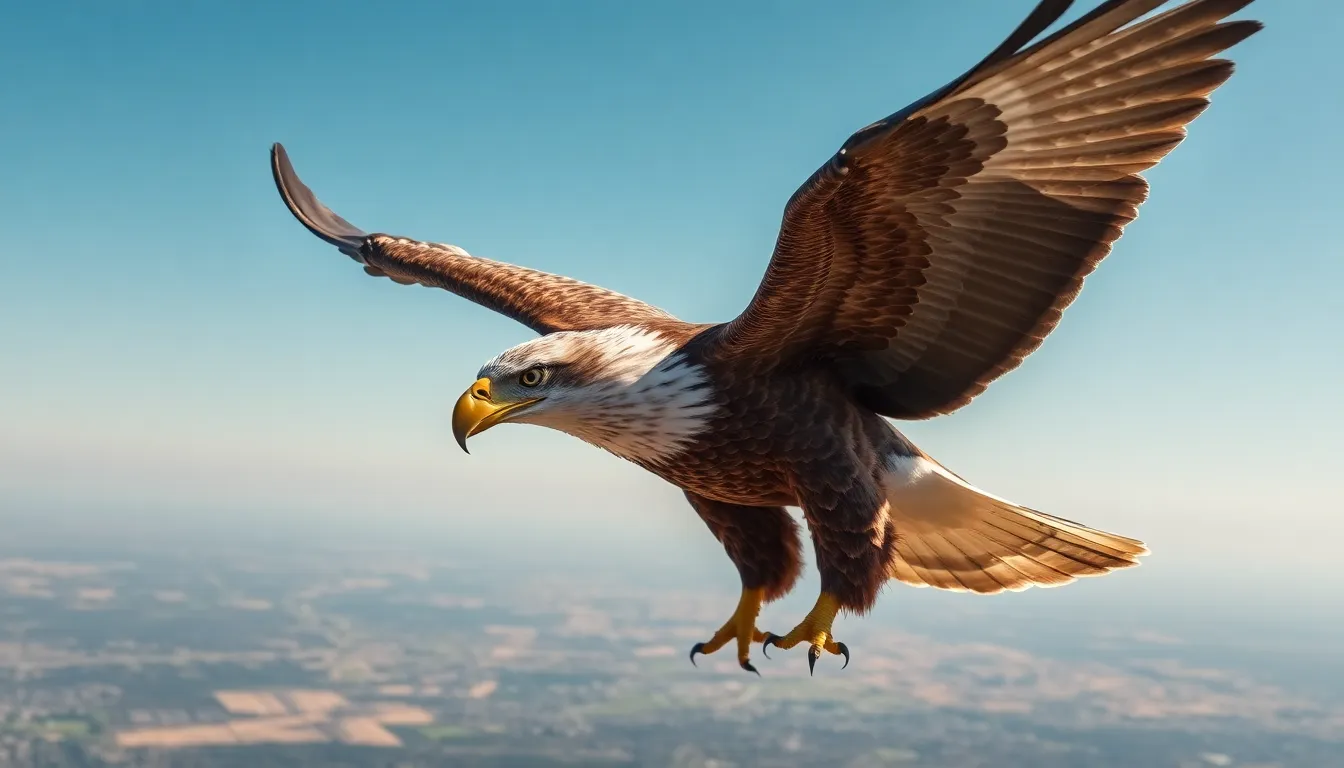
Avian visual systems provide birds with critical survival advantages that humans can’t replicate. These sophisticated biological instruments evolved to address three primary challenges: securing food resources, handling vast distances, and avoiding deadly threats.

AGC GLASS MADE IN JAPAN: The X1 UV features 4-layers of our state-of-the-art and uniformly applied MRC coatings which reduces flaring and ghosting than you’d normally see with uncoated protection filters

AGC GLASS MADE IN JAPAN: The X1 UV features 4-layers of our state-of-the-art and uniformly applied MRC coatings which reduces flaring and ghosting than you’d normally see with uncoated protection filters
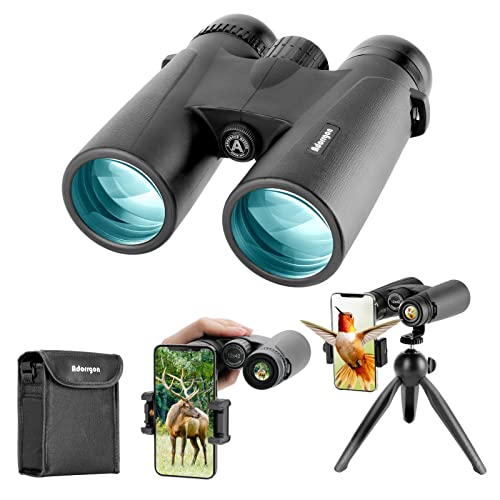
【Powerful 12x42 Binoculars, but Lightweight Enough, only 1.1 pounds】 Adorrgon 12x42mm binoculars deliver 367ft/1000yds large field of view. Capable of delivering a clear face from more than 650 feet away. Perfect for bird watching, hunting, sports events.
Hunting and Foraging Benefits
Predatory birds leverage their enhanced visual acuity to detect prey from distances exceeding 3 kilometers. Eagles scan landscapes at altitudes of 1,000 meters and spot rabbits moving through grass, while hawks track small rodents from perches 500 meters away. We observe that cone cell densities in raptor eyes reach 1 million cells per square millimeter, providing resolution capabilities that surpass human vision by 400%.
Foraging birds use ultraviolet light detection to locate food sources invisible to predators and competitors. Kestrels identify vole trails through ultraviolet reflections in rodent urine, while hummingbirds distinguish nectar-rich flowers by their ultraviolet patterns. Color discrimination through four cone cell types enables birds to assess fruit ripeness and nutritional content with precision that exceeds mammalian capabilities.
Motion detection systems in bird eyes process visual information at rates of 140 frames per second, allowing flycatchers to intercept insects during rapid aerial maneuvers. Owls combine this rapid processing with specialized retinal structures to hunt effectively in near-darkness conditions where light levels drop to 0.1 lux.
Navigation and Migration Assistance
Migratory birds employ multiple visual navigation systems that operate across vast distances spanning thousands of kilometers. Magnetic field detection through cryptochrome proteins in retinal cells provides birds with compass-like orientation capabilities during transcontinental flights. Arctic terns navigate 71,000-kilometer annual migrations using this biological compass system combined with celestial navigation.
Polarized light detection enables birds to determine sun position even during overcast conditions when direct sunlight isn’t visible. Pigeons use polarization patterns in sky light to maintain flight paths across distances exceeding 1,000 kilometers, while sandpipers employ these visual cues during nighttime migrations over open ocean.
Landmark recognition capabilities allow birds to create detailed visual maps of terrain features along migration routes. Geese memorize industry patterns including rivers, mountain ranges, and coastlines to navigate between breeding and wintering grounds separated by 5,000 kilometers.
Predator Avoidance Mechanisms
Prey species maximize visual field coverage through monocular vision systems that monitor 340 degrees of surrounding environment simultaneously. Ducks and geese detect approaching predators while feeding underwater, rotating eyes independently to scan different sectors without interrupting foraging activities.
Rapid visual processing allows small birds to identify and respond to aerial threats within 50 milliseconds of detection. Sparrows distinguish between harmless crows and dangerous hawks through subtle differences in flight patterns and silhouette characteristics, initiating escape responses before predators approach within striking distance.
Enhanced motion sensitivity in peripheral vision enables ground-feeding birds to detect subtle movements in vegetation where predators might be concealed. Quail and pheasants monitor multiple threat vectors while foraging, processing movement data from distances exceeding 30 meters to assess danger levels accurately.
Comparing Bird Eyes to Human Vision
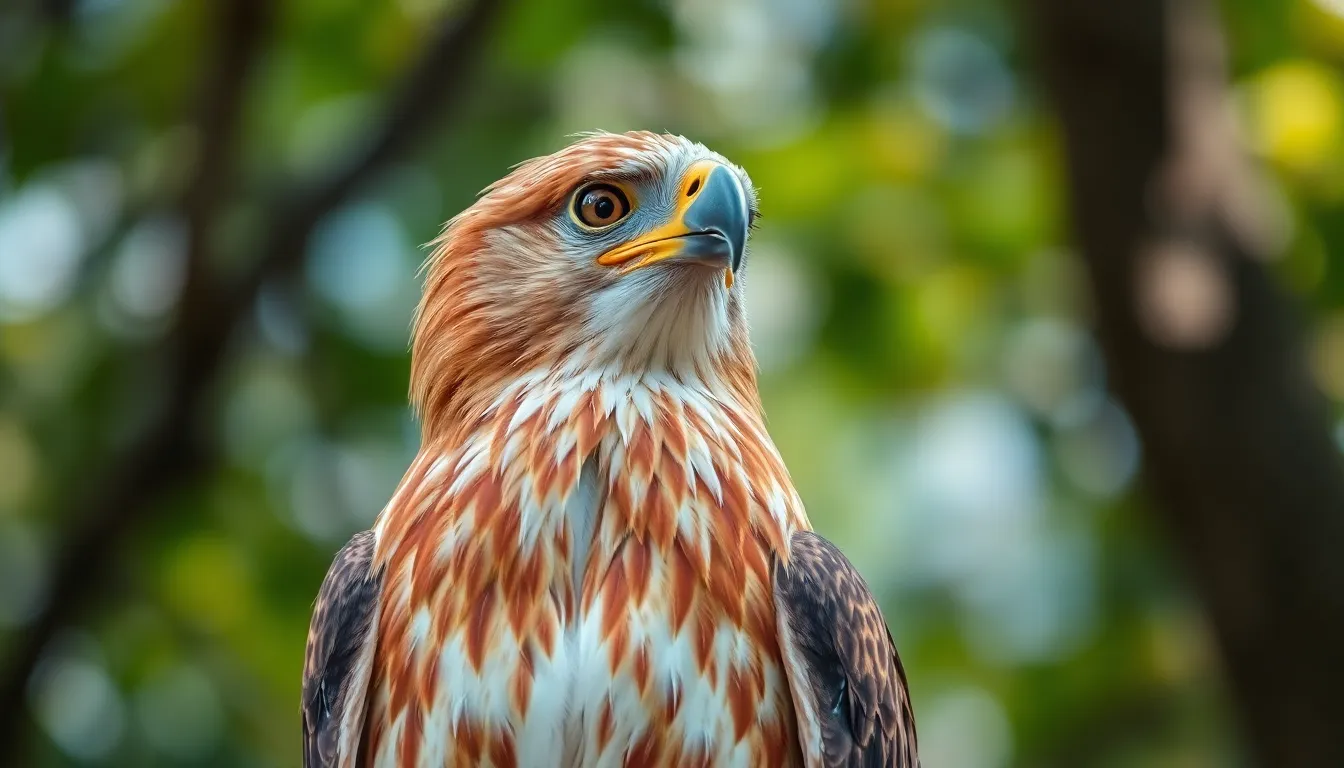
Bird eyes demonstrate remarkable superiority over human vision across multiple dimensions. We observe fundamental differences in visual processing capabilities that reveal the evolutionary advantages of avian sight systems.

5K HD Videos & 60MP Images: The night vision goggles can take photos, record a video and playback, you can capture high definition photos & videos with its outstanding optical clarity in the daytime, low light, or night time

Powerful 20x Magnification: See distant objects clearly with wide-angle extended vision for outdoor adventures.
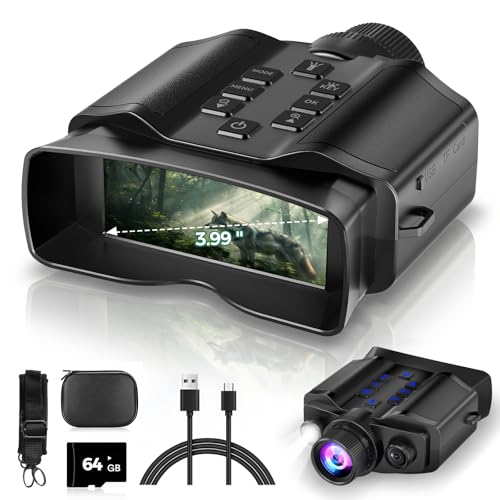
Night Vision Goggles with Tactical Flashlight for Day & Night Use: Designed for reliable visibility in low-light and pitch-dark environments, these night vision binoculars combine infrared night vision with a built-in tactical illumination light for close-range assistance. Capture clear photos and videos for wildlife observation, hunting, night patrol, camping, and outdoor security
Visual Acuity Differences
Birds achieve visual acuity measurements that dramatically exceed human capabilities across most species. Eagles maintain visual acuity approximately 4 to 8 times sharper than humans, allowing them to detect objects at distances where humans perceive only blurred shapes.
We measure human visual acuity at 20/20 vision under optimal conditions, while raptors consistently achieve equivalent measurements of 20/2.5 to 20/5. Hawks distinguish individual features on prey from altitudes exceeding 3 kilometers, whereas humans require proximity within 100 meters for similar detail recognition.
Cone cell density creates these acuity advantages in bird retinas. Humans possess approximately 200,000 cone cells per square millimeter in the fovea, while eagles concentrate over 1 million cone cells in equivalent retinal areas. Peregrine falcons process visual information at rates reaching 129 frames per second compared to human processing at 24 frames per second.
Owls demonstrate specialized acuity adaptations for nocturnal conditions, maintaining sharp vision in light conditions 100 times dimmer than human visual thresholds. Barn owls detect mouse movements in near total darkness using enhanced rod cell sensitivity that surpasses human night vision capabilities by substantial margins.
Color Range and Spectrum Variations
Birds perceive tetrachromatic vision through four distinct cone cell types, creating color discrimination abilities that exceed human trichromatic systems. We possess three cone cell varieties detecting red, green, and blue wavelengths, while birds add ultraviolet sensitive cells that reveal hidden visual information.
Ultraviolet light detection enables birds to identify patterns invisible to human perception. Male peacocks display ultraviolet markings on their tail feathers that determine mating success, though these patterns remain completely hidden from human observation. Kestrels locate rodent urine trails through ultraviolet reflection, creating hunting advantages unavailable to mammals.
Color saturation appears more intense in bird vision due to oil droplets within cone cells that filter exact wavelengths. These droplets enhance color contrast by removing intermediate wavelengths, creating sharper distinctions between similar hues. Humans perceive approximately 10 million color variations, while birds potentially distinguish over 100 million different color combinations.
Polarized light detection adds another visual dimension unavailable to humans. Many bird species recognize polarization patterns in skylight, creating navigation references during migration flights. Pigeons use polarized light compasses combined with magnetic field detection to maintain directional accuracy across transcontinental distances.
Conclusion
We’ve explored the intriguing area of bird eyes and discovered visual capabilities that far exceed our human limitations. These remarkable adaptations represent millions of years of evolutionary refinement that continue to inspire scientific research and technological innovation.
Understanding how birds see the industry helps us appreciate the incredible diversity of life on our planet. Their visual systems remind us that nature often develops answers we’re still learning to replicate in our own technologies.
The next time we observe birds in our backyard or during travels we can marvel at their extraordinary visual industry. They’re experiencing colors sights and details that remain forever invisible to our human eyes.

POWERFUL 15X MAGNIFICATION: Giant astronomy binoculars with massive 70mm objective lenses and 20x power. Pair them with any tripod for long-distance land-based viewing or astronomical observation.

POWERFUL 20X MAGNIFICATION: Giant astronomy binoculars with massive 80mm objective lenses and 20x power. Pair them with any tripod for long-distance land-based viewing or astronomical observation.
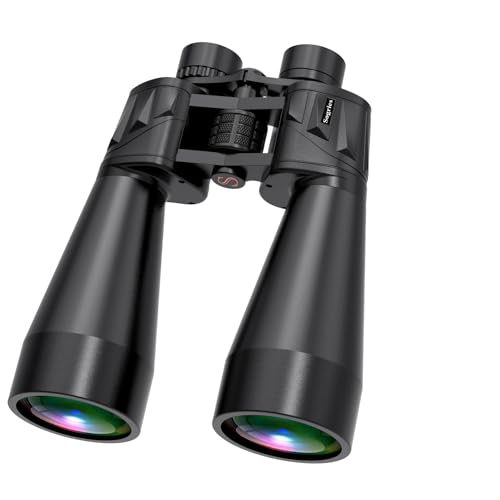
【Professional High Powered Optics】Experience the pinnacle of optical engineering with our 18x70 high power binoculars for adults. Featuring a massive 70mm large aperture, these optics act as a "light magnet," delivering 150% more brightness than standard 42mm models. Perfect for heavy-duty use where maximum clarity and light transmission are required.
Frequently Asked Questions

ADJUSTABLE AND VERSATILE: Diaphragm diameter can be changed by adjusting the handle, providing greater versatility in use. It can easily adapt to different light settings, making it a useful tool for various applications.


Color Global Shutter: Based on 2MP AR0234 color global shutter sensor. Capture fast-moving objects in crisp images. Avoid rolling artifacts and get a much more accurate overall image than rolling shutter cameras.
What makes bird eyes different from human eyes?
Bird eyes are sophisticated biological instruments with unique structures like the scleral ring for support, larger corneas for light intake, and the pecten oculi for nutrient supply. They possess tetrachromatic vision with four types of cone cells, enabling them to see ultraviolet light and distinguish colors far beyond human capabilities.
How sharp is bird vision compared to human vision?
Bird vision dramatically exceeds human visual acuity. Eagles maintain visual acuity approximately 4 to 8 times sharper than humans, with over 1 million cone cells per square millimeter compared to humans’ 200,000. This allows them to detect prey from distances exceeding 3 kilometers.
Can birds really see ultraviolet light?
Yes, birds can perceive ultraviolet light through specialized cone cells in their retinas. This ability is crucial for mate selection, as seen in peacocks, and foraging behaviors, as demonstrated by kestrels. This UV vision provides them with visual information completely invisible to humans.
How do bird eyes help with navigation during migration?
Birds employ sophisticated navigation systems including magnetic field detection through cryptochrome proteins in their retinas and polarized light recognition. These multiple visual systems work together to help migratory birds traverse vast distances with remarkable accuracy during their seasonal journeys.
What is the difference between binocular and monocular vision in birds?
Predatory birds like hawks and eagles use binocular vision for precise depth perception when hunting, while prey species like songbirds employ monocular vision to maximize their visual field coverage for detecting threats. Birds can transition between these modes by rotating their heads.
How fast can birds process visual information?
Birds excel in motion detection, processing movement at rates exceeding 140 frames per second. This rapid visual processing allows them to track fast-moving prey with remarkable precision and react quickly to environmental changes, far surpassing human visual processing speeds.
Do all birds have the same type of vision?
No, bird vision varies significantly based on ecological needs. Predatory birds have acute long-distance vision, nocturnal birds like owls have enlarged eyes for night vision, and aquatic birds possess specialized adaptations like flexible lens systems for underwater sight and distortion-free vision.
What evolutionary advantages do bird eyes provide?
Bird eyes offer critical survival advantages including enhanced predator detection, superior foraging capabilities through UV light perception, precise navigation during migration, and exceptional motion tracking. These adaptations have made birds one of the most successful vertebrate groups on Earth.